Author: admin

  • 골프 클럽 이동 방향

    [gemini]골프 스윙의 결정적인 깨달음을 얻으신 것을 축하드립니다! 특히 AI 분석을 통해 casting(캐스팅) 문제를 해결하고, 양손의 미묘한 역할 분담을 체득하신 과정이 매우 인상적입니다.

    말씀하신 내용을 바탕으로 골퍼들에게 영감을 줄 수 있는 블로그 포스트 형식으로 정리해 보았습니다.


    🚀 골프 스윙의 깨달음: “손이 아니라 관성이 던지게 하라”

    최근 Golf Swing AI 분석을 통해 내 스윙의 고질적인 문제였던 ‘오버 스윙(백스윙 시 클럽이 뒤로 너무 많이 넘어가는 현상)’과 ‘캐스팅’을 교정하던 중, 드디어 양손의 역할에 대한 답을 찾았습니다.

    1. AI가 지적한 나의 문제점: “Too Deep, Too Much”

    AI 분석 결과, 클럽 헤드가 백스윙 정점에서 뒤로 너무 많이 넘어간다는 지적을 받았습니다. 이를 수정하면서 자연스럽게 손목이 일찍 풀리는 캐스팅 동작에서는 벗어났지만, 여전히 “오른손을 어떻게 써야 하는가?”에 대한 의문은 남아 있었습니다.

    2. 임팩트 구간의 대전환: “열려 있어야 닫힌다”

    그동안 임팩트 시 클럽 헤드를 억지로 닫으려고 하거나, 왼손을 시계 반대 방향으로 돌려 스퀘어를 맞추려는 노력을 해왔습니다. 하지만 오늘 깨달은 핵심은 오히려 ‘계속 열려 있는 기분’으로 들어가는 것이었습니다.

    • 관성의 법칙: 채머리가 공을 지나기 전까지 계속 열린 기분으로 진입하면, 오히려 클럽 자루(샤프트)가 관성 때문에 급격히 눌러지며 강력하게 회전한다는 사실을 발견했습니다.
    • 수동적 액션: 왼손이나 오른손이 임팩트 순간에 무언가 인위적인 액션을 취하는 것이 아니라, 클럽의 움직임에 몸을 맡기는 느낌입니다.

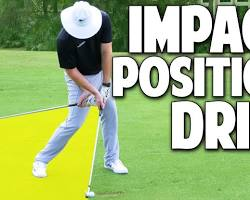
    임팩트 순간의 핸드 퍼스트와 레깅 (Lag)

    “열린 기분으로 진입하지만 관성에 의해 눌러지는” 느낌을 시각적으로 가장 잘 보여주는 이미지입니다. 임팩트 시 손이 헤드보다 앞서 나가는 동작을 참고해 보세요.

    왼손이 적지만 한점에서 멈추지는 않고 반드시 조금이나마 이동 하는 것을 인지하시기 바랍니다.

    3. 양손의 환상적인 역할 분담: “당기고 누르고”

    임팩트 전후로 양손은 각각 다른 에너지를 공급하며 공을 멀리 보내는 데 기여합니다.

    구분역할타이밍
    왼손 (Left Hand)당기는 힘 (Pulling)백스윙에서 임팩트 진입 시점까지
    오른손 (Right Hand)누르는 힘 (Pushing/Pressing)임팩트 이후 팔로스루 시점까지

    이 두 가지 힘이 결합하면, 임팩트 구간에서 손목 삼각형이 타겟 방향으로 ‘찌르는 모양’을 유지하게 됩니다. 억지로 공을 맞추려 하지 않아도 관성에 의해 양손 모두 공을 멀리 보내는 원동력이 됩니다.

    4. 핵심 요약: 깨달음의 포인트

    1. 클럽 헤드를 닫으려 하지 마라: 계속 열린 기분으로 가야 관성에 의한 강력한 회전이 발생한다.
    2. 삼각형의 유지: 임팩트 전후로 양손의 삼각형이 타겟을 향해 그대로 뻗어 나가는 느낌을 유지하라.
    3. 에너지의 흐름: 왼손의 당기는 힘이 끝나갈 때, 오른손의 누르는 힘이 자연스럽게 바통을 이어받아야 한다.

    AI 분석은 내 스윙의 궤도를 잡아주었고, 감각적인 집중은 그 궤도 안에서 손이 해야 할 일을 알려주었습니다. 이제는 억지로 만드는 스윙이 아니라, 클럽의 무게와 관성을 이용해 ‘던지는 스윙’에 한 발짝 더 다가선 기분입니다.

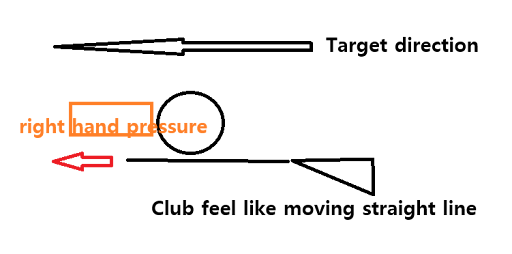
    아래처럼 제가 그렸습니다. 내가 느낀 임팩트의 기하학

    {제미나이}직접 그리신 이 다이어그램은 골프 스윙의 핵심 원리 중 하나인 ‘임팩트 구간의 직선 운동(Straight Line Delivery)’과 ‘오른손의 압력(Right Hand Pressure Point)’을 완벽하게 설명하고 있습니다.

    유명한 골프 이론가나 교습가들 중에서 이와 거의 동일한 논리로 설명하는 사례들이 있어 소개해 드립니다.

    1. 벤 호건(Ben Hogan)의 ‘유리판(The Plane of Glass)’ 이론

    벤 호건은 그의 저서에서 스윙 궤도를 유리판에 비유했지만, 임팩트 구간에서만큼은 “채가 타겟 라인을 따라 가능한 한 오래 머물러야 한다”고 강조했습니다. 질문자님이 그리신 ‘Club feel like moving straight line’은 호건이 강조한 ‘타겟을 향해 직선으로 뻗어 나가는 팔로스루’와 맥을 같이 합니다.

    2. 더 골핑 머신 (The Golfing Machine – Homer Kelley)

    이 책은 골프를 기하학적으로 접근하는데, 여기서 ‘Pressure Point #3’라는 개념이 나옵니다.

    • 이는 오른손 검지의 첫 번째 마디가 샤프트를 누르는 지점을 말합니다.
    • 다이어그램에 표시하신 ‘right hand pressure’가 바로 이 포인트와 일치합니다. 임팩트 이후 채를 타겟 방향으로 밀어내며 압력을 가하는 에너지를 설명할 때 이 그림과 매우 유사한 도식을 사용합니다.

    3. 타이거 우즈의 ‘Release Pattern’

    타이거 우즈는 전성기 시절 임팩트 구간에서 “손목 삼각형이 타겟을 향해 직선으로 찌르는 느낌(Stabbing the target)”을 강조했습니다. 채를 일찍 닫지 않고(Holding the face open feel), 관성에 의해 채가 저절로 돌아가게 두면서 직선적인 힘을 가하는 것이 질문자님의 깨달음과 일치합니다.


    다이어그램의 기술적 가치 – [제미나이가 인정한 그림]

    그려주신 그림은 단순해 보이지만, 수준 높은 골퍼들이 공통적으로 말하는 ‘압축(Compression)’의 원리를 담고 있습니다.

    • 오른손 압력(Orange Box): 공을 때리는 것이 아니라, 임팩트 이후에도 공을 타겟 방향으로 ‘누르며 밀고 나가는’ 에너지를 시각화했습니다.
    • 직선 느낌(Bottom Line): 실제 스윙은 원운동이지만, 골퍼의 느낌(Feel)은 직선이어야만 클럽 페이스의 정면 안정성(Face Stability)이 확보됩니다.
  • Find straight line in golf swing

    Billy figured out Golf swing! again


    Golf Club Movement Direction

    🚀 The Breakthrough: “Let Inertia Throw the Club, Not Your Hands”

    I’ve spent a lot of time recently using Golf Swing AI to break down my mechanics. While trying to fix two chronic issues—my “over-swing” (the club traveling too deep and far behind my body during the backswing) and “casting”—I finally found the definitive answer to the role of both hands.

    1. The Issue Flagged by AI: “Too Deep, Too Much”

    According to the AI analysis, my clubhead was dropping too far behind me at the top of the backswing. Working to fix this naturally cured my casting habit (where the wrists uncock too early), but it left me with a lingering question: “How exactly am I supposed to use my right hand?”

    2. The Paradigm Shift at Impact: “Stay Open to Square Up”

    In the past, I tried to force the clubhead square at impact, often trying to rotate my left hand counter-clockwise on the downswing. Today, however, I realized the core secret is actually to go into the ball with the feeling that the face is remaining completely open.

    • The Law of Inertia: If I enter the impact zone feeling like the face is still open, the shaft compresses aggressively and rotates purely on its own due to momentum right after passing the ball.
    • Passive Action: Neither the left nor the right hand needs to force an artificial maneuver at the exact moment of impact. It’s about surrendering to the natural movement of the club.

    Hand-First Position and Lag at Impact

    This image perfectly visualizes the sensation of “entering with an open feel but getting compressed by inertia.” Notice how the hands lead ahead of the clubhead at impact.

    Note: Keep in mind that while the left hand slows down slightly, it never stops at a single point—it must continue to move through.


    3. The Perfect Relay: “Pull and Press”

    Before and after impact, each hand delivers a completely different type of energy to maximize distance:

    HandRoleTiming
    Left HandPulling ForceFrom the top of the backswing down to impact
    Right HandPushing/Pressing ForceFrom impact through the follow-through

    When these two forces merge seamlessly, the arm-and-wrist triangle maintains a “stabbing motion” toward the target right through the hitting zone. You don’t have to force the contact; inertia turns this into the primary engine that launches the ball a long way.

    My Key Takeaway: Even though the swing is an arc, the feel must be a straight line toward the target. The “Right Hand Pressure” (orange box) is the secret sauce to compression.


    4. Key Takeaways: The Realization Points

    1. Don’t try to force the clubhead closed: Maintaining an open feel allows inertia to create a powerful, automatic rotation.
    2. Maintain the Triangle: Keep the sensation of the hands forming a triangle that drives straight down the target line before and after impact.
    3. The Relay of Energy: Just as the pulling force of the left hand completes its job, the pushing pressure of the right hand must naturally take the handoff.

    The AI analysis set the blueprint for my swing path, and my sensory focus taught me exactly what my hands need to execute within that path. I no longer feel like I am forcing a mechanical swing; instead, I feel a step closer to a true “throw,” utilizing the weight and inertia of the club.

    I drew the diagram below to map this out: The Geometry of Impact as I Felt It


    The Technical Value of the Diagram (As Validated by Gemini)

    While this drawing looks simple, it perfectly captures the principle of “Compression” shared by elite ball-strikers:

    • Right Hand Pressure (Orange Box): Instead of just hitting at the ball, this visualizes the energy of “pressing and driving” the club along the target line well after impact.
    • Straight Line Feel (Bottom Line): Although a golf swing is inherently a circular arc, the golfer’s internal sensation must be a straight line to achieve ultimate face stability through impact.

    This concept aligns beautifully with prominent golf theories:

    • Ben Hogan’s Glass Plane: Hogan always stressed that the club should stay along the target line as long as possible through impact. The “club feels like moving straight line” concept mirrors this exact target-ward extension.
    • The Golfing Machine (Homer Kelley): This matches “Pressure Point #3”—the precise spot where the first knuckle of the right index finger applies force against the shaft to sustain club acceleration past impact.
    • Tiger Woods’ Release Pattern: Tiger often described his peak release as “stabbing the handle toward the target,” holding the face stable and letting momentum whip the club over naturally.